










Blog

Spanish Symbols: Meaning and Cultural Identity

Two people stand before historic windmills at sunset.

Spanish Symbols: Meaning and Cultural Identity

Spanish Symbols and Characters

To truly understand Spain, it is not enough to learn the language. You also need to recognize the symbols, characters, and cultural icons that shape the country’s identity. Some are historical, others literary, and some appear in everyday life, art, politics, and popular culture. Together, they help explain how Spain sees itself and how it is represented both at home and abroad.

These symbols are not just decorative images. They carry emotional, historical, and cultural meaning. They can appear in novels, films, newspapers, public debates, and even on roadside hills. For students learning Spanish, understanding these references is a great way to connect more deeply with Spanish culture.

Famous Spanish Characters

Spain has created some of the most memorable characters in world literature and culture. Many of them have gone far beyond their original stories and become universal symbols.

Don Quijote

Don Quijote is one of the most famous literary characters ever created. Written by Miguel de Cervantes, he represents imagination, idealism, and the fine line between heroism and madness. His image is deeply linked to Spain and especially to La Mancha, where the famous windmills still evoke his adventures.

Don Juan

Don Juan is another iconic Spanish character. He has been reinterpreted many times in literature, theater, and film, and is associated with seduction, rebellion, and dramatic passion. Like Don Quijote, he has become much bigger than his original story.

El Cid and Carmen

Other key figures often associated with Spain include El Cid, the medieval warrior linked to honor and heroism, and Carmen, the passionate and tragic character who became one of the best-known representations of Spain in opera and popular culture.

These characters continue to influence how Spain is imagined both inside and outside the country.

The Most Recognizable Spanish Symbols

Spain is also rich in visual and cultural symbols. Some come from history, others from literature, and some from popular life. All of them help express ideas of identity, tradition, and belonging.

The Bull

The bull is one of the most widely recognized symbols of Spain. Although its meaning is complex and often debated, it is associated with strength, passion, and traditional imagery connected to the country. For many people abroad, the bull is one of the first images that comes to mind when thinking about Spain.

The Windmills of La Mancha

The windmills of La Mancha are among Spain’s most famous cultural symbols because of their connection to . More than just part of the landscape, they represent literature, history, and one of the country’s most universal stories.

El Oso y el Madroño

Madrid’s famous statue of El Oso y el Madroño is one of the best-known urban symbols in Spain. Located in Puerta del Sol, it represents the city of Madrid and appears in countless photographs, postcards, and cultural references. It is an essential symbol of the Spanish capital.

The Spanish Flag

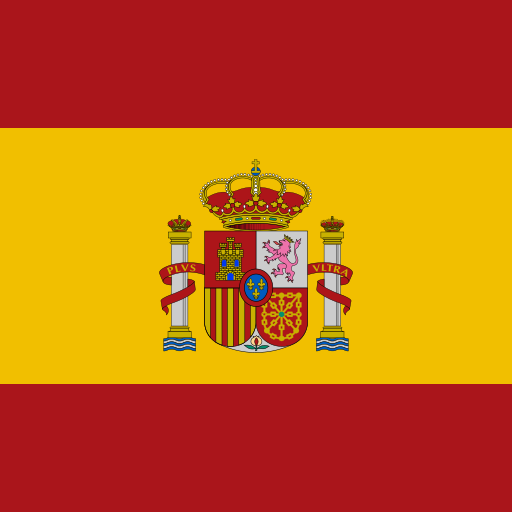
The Spanish flag is another central symbol of national identity. Like all flags, it carries political and emotional meanings, and its use can vary depending on the historical or social context. Understanding its history helps explain important aspects of Spain’s past and present.

The Osborne Bull: From Advertising to National Symbol

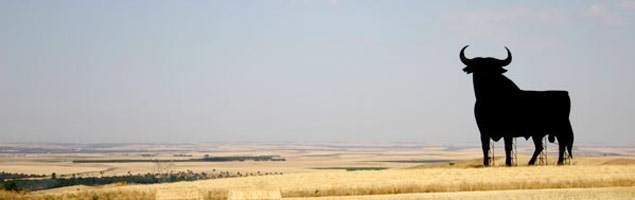
One of the most striking symbols in Spain is the Osborne Bull, the large black silhouette often seen on hillsides near roads across the country. Today it is considered an unofficial symbol of Spain, but it did not begin that way.

The Osborne Bull started as an advertising image for the Osborne sherry company in 1956. It was originally created to promote . Over time, changes in advertising laws forced the removal of commercial branding, but the bull itself remained. Eventually, it was preserved because many people felt it had become part of the Spanish landscape and had acquired cultural and artistic significance.

Since then, the Osborne Bull has gone beyond advertising and become a symbol of Spanish identity. It appears on souvenirs, clothing, stickers, and many other objects associated with Spain.

The Catalan Donkey: A Regional Alternative

In contrast to the Osborne Bull, the Catalan donkey emerged as a regional symbol in Catalonia. It was created in 2003 by Jaume Sala and Àlex Ferreiro as an alternative to the bull and quickly became popular as a sticker and cultural emblem.

The donkey was chosen because it was seen by many supporters as a symbol of values they identified with: being hardworking, stubborn, resilient, and quietly intelligent. It also had a satirical dimension, presenting itself as a softer and more local alternative to the more dominant image of the bull.

Although the Catalan donkey has never reached the same national visibility as the Osborne Bull, it remains one of the best-known examples of how symbols can reflect regional identity in Spain.

Symbols, Identity and Cultural Meaning in Spain

Spanish symbols are important because they often express more than a simple image. They can represent history, politics, literature, regional pride, or a shared way of understanding the country. That is why they appear so often in literature, film, art, and public conversation.

For someone studying Spanish, learning these references is especially useful. Knowing who Don Quijote is, recognizing the Osborne Bull, or understanding the meaning of El Oso y el Madroño makes it easier to follow cultural conversations and appreciate the deeper meaning behind many references in Spain.

Understanding Spain Through Its Symbols and Characters

From legendary literary figures to powerful visual icons, Spanish symbols and characters offer a fascinating way to understand the country. They help explain Spain’s traditions, regional diversity, historical memory, and cultural imagination.

Whether you are interested in literature, art, history, or everyday culture, these symbols are a great starting point for discovering a richer and more complete picture of Spain.