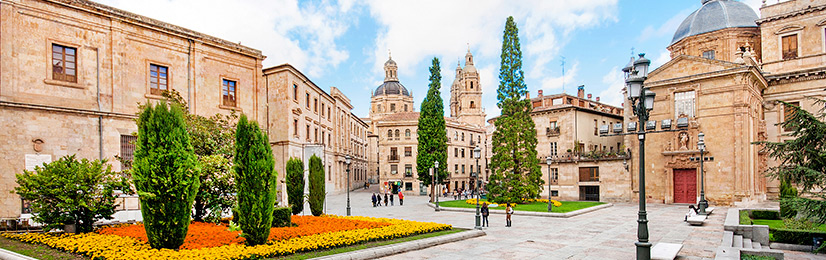
Salamanca Travel Guide

Salamanca Travel Guide

Salamanca Fast Facts

Population Approx. 160,000
Autonomous Community Castile-Leon/ Castilla y León
People Salmantinos
Geography Midwest Spain - just a few hours east of Portugal. Salamanca lies on a plateau by the Tormes River.
Climate Cold, windy and wet winters with gorgeous, relatively mild and sunny summers.
Average Yearly Temperature 11.6ºC (53ºF)
Local fare Cochinillo (suckling pig), chanfaina salmantina (rice, giblet, sweetbreads and chorizo), farinatos (fried sausage with egg), meat stews, almond cookies, marzipan, pinchos (bread with any variety of toppings), torrijas (sweet french toast)
Tourist Office Plaza Mayor 14
Tel (+34) 923 218 342
Did you know? Salamanca has its own local astronaut! Look closely at the 16th century cathedral facade and you'll find a cosmonaut engraved amidst gargoyle friends. It's the work of mischievous stonemasons who left their mark during recent rennovations.

Salamanca City Highlights

La Plaza Mayor
Center of all Salmantino activity, the Plaza Mayor continues to bustle as it did in the 18th century. Widely considered Spain's most beautiful square, its intricate baroque adornment glimmers on yellow sandstone by day. By night, the plaza lights up to welcome visitors, local students and veteran Salmantinos alike who enjoy the fresh air and lively ambience.

The University of Salamanca
Founded way back in 1218, Salamanca boasts Europe's 4th oldest university, present all around in elegant, yellowstone buildings dating to the . Breath in more than 800 years of intellectual life as you wander the streets and halls of Spain's great thinkers like Luis de Góngora, Miguel de Unamuno and Pedro Calderón de la Barca. Reputation still intact, Spanish students flock here from all over the country, mixing with international coeds to make up more than 30% of the city's total population.

Nightlife
Madrid is Spain's nightlife mammoth, but Salamanca packs the same punch with small town prices! From big discotecas to intimate jazz haunts, students pile into all kinds of locales every night of the week. If you're into partying at cheap prices - and who isn't? - Salamanca is the perfect place to study Spanish.

Visit Salamanca During...

MARCH/APRIL: Easter Week
Salamanca's "Semana Santa" celebrations are among the most impressive in Spain, with massive processions emerging from the city's soaring Gothic cathedral. "Lunes de Aguas," the Monday proceeding Easter, marks a distinctive Salmantino tradition. In the Middle Ages, this was the day that prostitutes were re-welcomed to the city after their temporary exile to the other side of the Tormes River during Lent. Nowadays, locals remember the tradition by picnicking outdoors and eating "hornazo," a traditional meat pie, leaving behind the somber penitence of weeks past to revel in the cheerful company of friends and family.

JUNE: El Día de San Juan de Sahagún
On June 12, Salamanca celebrates San Juan de Sahagún, the city's patron saint. Highlights include fireworks, bullfights, and a quaint baroque market full of regional handmade products. Everyone takes off work and school to join in the festivities and, of course, party 'til they drop.

SEPTEMBER: Las Ferias de Salamanca
All kinds of music and dance, temporary fair grounds, fireworks, outdoor concerts, theatrical productions and bullfights fill the second week of September for Salamanca's annual fair.

Getting to Salamanca

By Air
There is no airport in Salamanca. The closest international airport is Madrid Barajas. Public transport from Madrid's bus or train station will take you to Salamanca in about 2.5 hours.

By Train
Regional rail arrives at Paseo del Estación, about a 15-minute walk from the historic center.

By Bus
Various bus companies operate out of the station on Avda. de Filiberto Villalobos, also just 15 minutes walking from the Plaza Mayor. National travel by bus is cheaper than train, and there are more direct routes to Spanish and Portuguese destinations.