
Blog
Carnivals in Spanish-Speaking Countries
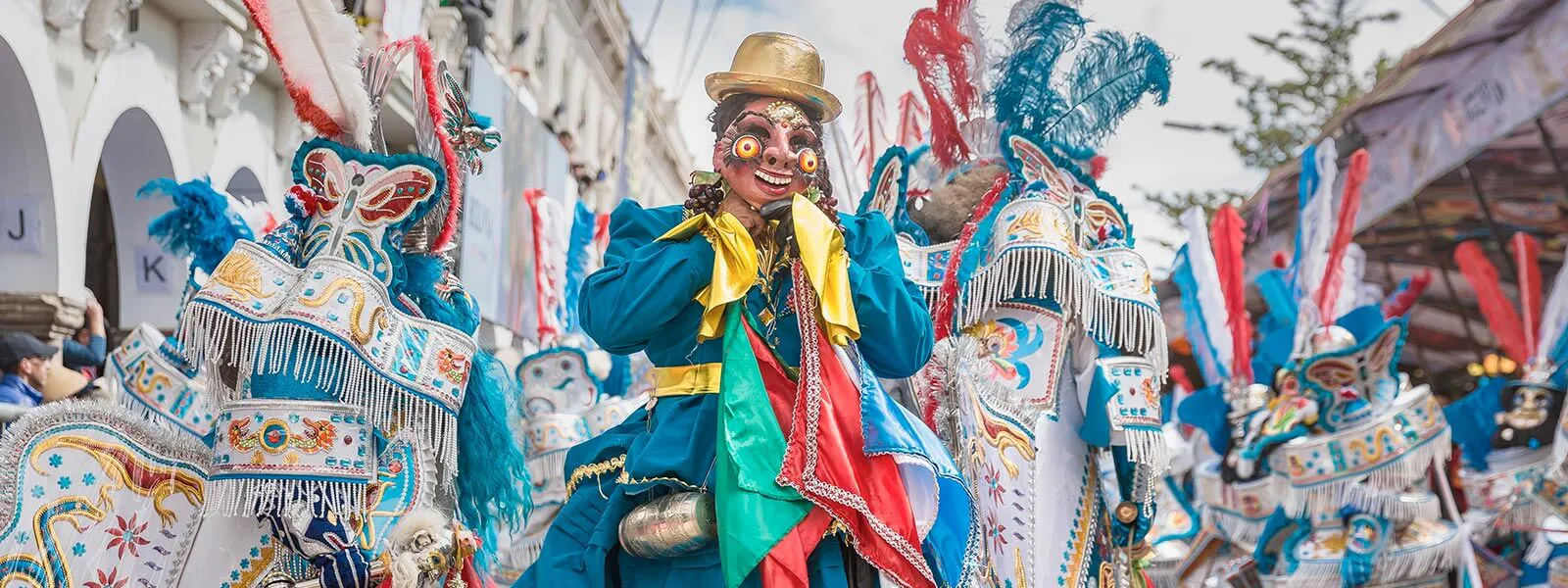
Carnivals are part of our culture and heritage. We will tell you more about this popular festival celebrated in many Spanish-speaking countries.
In Spanish-speaking countries, Carnival is a fundamental celebration: traditional yet fun, and a great opportunity to forget your troubles and enjoy life. And each country has its own unique rituals and customs. Here are some interesting facts about them.
It is said that the famous Carnival of Cádiz was established in the 15th century by Genoese and Venetian merchants who settled in the city. Let's not forget the commercial importance this Andalusian city has always had.
In many countries in the Americas, carnivals are celebrated in the summer (let's not forget tropical countries or that, in the Southern Hemisphere, summer lasts from December to March). That's why they are bright, warm, joyful, and even sensual!
It is said that the first Carnival organized in the Americas took place by order of Hernán Cortés, who raised funds to celebrate it in Mexican lands. Indigenous traditions and celebrations were soon incorporated, giving rise to fascinating festivities.
The famous “donkey halls” of the Barranquilla Carnival in Colombia are spaces where people gather to dance, have drinks, and have a good time. Their name comes from the donkeys that customers would tie up at the entrance as a means of transportation.
In Tilcara, Argentina, the carnival begins with the unearthing... of the devil! But there's nothing evil about it: this devil, called “Pucllay,” represents the sun and is a reminder of indigenous festivities.
Pre-Hispanic elements are also present in the “Diablada,” celebrated in the Oruro region of Bolivia. In this dance, participants wear striking and beautiful costumes representing the eternal struggle between good and evil. It was declared a “Masterpiece of the Oral and Intangible Heritage of Humanity” by UNESCO.
In Peru, the water fight is a fundamental part of Carnival, a true water battle in which residents of different cities chase each other with buckets or water balloons to cool off.
These are some of the highlights, but if you come to our schools, you're sure to learn many more details and celebrations. Take advantage of this February to learn Spanish!