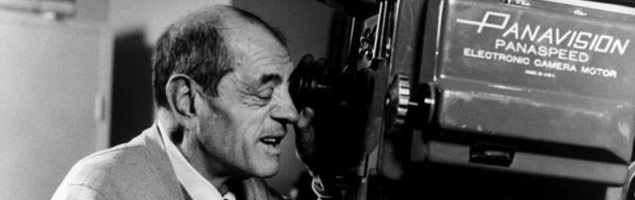


Luis Buñuel's Life
Luis Buñuel was a highly regarded Spanish filmmaker who worked across many different countries including Spain and Mexico. He is particularly famous for his short movie he made with Salvador Dalí, 'Un chien andalou' (An Andalusian Dog).
Luis Buñuel was born in Aragon, Spain, as the eldest of seven children. He was from a strict religious background with a Jesuit education. He is considered one of the top contributors to Spanish film making as well as one of the most influential in the world of cinema. He spent his life experiencing several cultures, which influenced his films, and he thrived on the incorporation of surrealism into his work; an example of this is Simon of the Desert, which tells the story of a saint being tempted by the devil to deviate from spiritual purity by taking the form of a beautiful woman.
He first got his foot in the door when he moved in 1925 to Paris, where he was able to become the assistant for Jean Epstein. In his early years he was close friends with Salvador Dali and studied at the University of Madrid, where he majored in History. His first short piece, Un Chien Andalou, was a 16-minute collaboration with Salvador Dalí filled with disturbing images that delighted their surrealist followers. Today this movie is still screened and considered to be one of the best of its kind from this period.
His second installment with Dali caused the breakdown of their friendship, mainly to do with issues of Buñuel's distaste of the Roman Catholic Church that was ever so evident within his work. His surrealist style and avant garde opinions were enough to convince him that he wouldn't fare well within the cloud of the Spanish Civil War looming over them.
He moved to the United States and soon found himself in Hollywood, where he tried getting involved in the short-lived practise of recreating American films as foreign remakes. From 1942 until 1946 he found himself working for Warner Brothers; there, he dubbed films, as he had taken a long break of fifteen years between directing. Buñuel began directing again when he went to Mexico; here he produced some brilliant pieces of work, including Los Olvidados, which follows the unsettling story of a group of Mexican children's unethical struggle through poverty. Mexico seemed to be where he focused a lot of his attention; even when he had left Buñuel still put his time into producing Mexican films. His work certainly displays a real flourishing aspect to his surrealism and the humor really starts to develop.
He later travelled to France, where he directed what have been considered to be some of his best pieces of work. An example is Diary of a Chambermaid, although it has been noted that the film lacked the same level of surrealism that had been commonly known and drew audiences to him. In 1934 Luis Buñuel married Jeanne Rucar, with who he spent the rest of his life and had two sons. His grandson has gone on to direct his own shows on the National Geographic Channel, so needless to say the talent runs in the family.
Today, Buñuel is remembered with a museum dedicated to him and his life's works, the 'Centro Buñuel Calanda', in the town where he was born, Calanda in Aragon, which has a large bronze sculpture of Buñuel's head outside.
Luis Buñuel´s Work
Buñuel liked to use every single piece of film that he shot. He was also very efficient as he would complete a movie in a couple of weeks. Buñuel minimized editing time by shooting as much of the movie as possible in order so that the editors would not need to cut up the film into many sections and then work out what order they needed to follow.
With such a vast and diverse list of his works, it could prove difficult to display all of Buñuel's talents on one page. Here is a list of some his most notable and brilliant pieces:
- An Andalusian Dog
- The Golden Age
- Gran Casino
- El Gran Calavera
- Susana
- Una Mujer Sin amor
- The Diary of a Chambermaid
- Simon of the Desert
- The Phantom of Liberty
- That Obscure Object of Desire